


 Pete Permitor
Last Updated: November 1, 2026
Quick Summary
Most building permit delays trace back to incomplete paperwork, not slow reviewers, so the clock usually stops because of the applicant. Avoid building permit delays by pulling your jurisdiction’s current submittal checklist first, running an intake self-check before you submit, and responding to every review comment in one pass.
Most building permit delays trace back to incomplete paperwork, not slow reviewers. A project often sits in the queue for weeks because a single drawing was missing or a form was signed in the wrong place.
The cost is real. A stalled permit holds up crews, financing, and tenants. Every week of delay pushes the construction timeline and adds carrying costs. A common mistake is blaming the city before checking the submittal.
A complete building permit application checklist is your best defense against review cycles. Run it before every submittal, and treat it as a gate, not a suggestion.
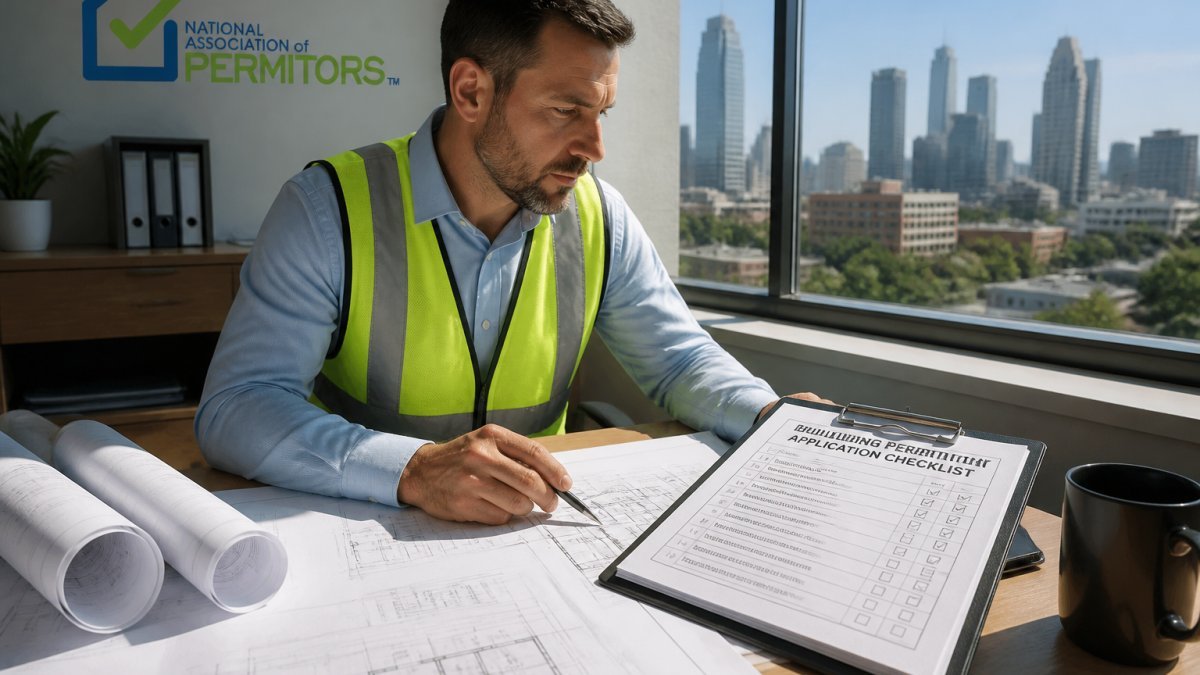
A generic checklist is the wrong order. Requirements and review processes vary by city, county, and project type, so the first task is to pull the actual submittal requirements for your jurisdiction before you draft anything. A practical pre-submission verification protocol:
Architectural drawings and construction plans must match the scope exactly. Understanding how architectural plans are used in the permitting process helps you assemble a submittal that survives first review.
Apply document-control discipline before you submit: use a consistent file-naming convention (project number, sheet number, revision letter, date), keep a version log, and confirm that the set you upload is the set your architect signed.
Zoning requirements and land use rules trip up more projects than any drawing error. Confirm the proposed use fits the parcel before you submit. Check setbacks, height limits, lot coverage, parking ratios, and local regulations against the building codes. If the use needs special approval, learn what a conditional use permit is and how it affects permit expediting early, so a zoning issue does not blindside your schedule.
Before you hit submit, run a final pass against the jurisdiction sheet you built in Step 1:
A package that passes this gate is the single highest-leverage way to avoid a correction cycle before it starts.
Plan review comments are not a dead end. They are a to-do list, and speed matters. Answer every correction notice point by point, in the order the reviewer raised them. Quote the comment, then state your fix and cite the revised sheet. Resubmit the full corrected set, not just the changed pages, unless the building department says otherwise.
Responding to plan review comments cleanly is how you avoid a second correction notice.
A realistic building permit approval timeline has decision points, not just dates. A useful timeline gives you more than the stages: it shows what to do at each one and which approvals can run in parallel. That is the difference between a schedule that absorbs one correction cycle and one that slips a quarter.
|
Stage |
What Happens |
Decision Point |
Action If It Stalls |
|---|---|---|---|
|
Pre-submission |
Assemble and self-check the package against the jurisdiction sheet |
Ready to submit? |
Do not submit until the intake self-check passes |
|
Intake |
Building department logs the application |
Complete or rejected? |
Fix intake rejections same day; ask for the specific deficiency in writing |
|
Plan review |
Reviewers check plans and code |
Comments issued? |
Log the review start date and the posted turnaround |
|
Corrections |
You revise and resubmit |
Approved or re-review? |
Respond to every comment in one pass; confirm each issue is closed |
|
Issuance |
Permit approval granted |
Start construction? |
Confirm all agency sign-offs are recorded before mobilizing |
The biggest scheduling mistake is treating every approval as sequential. In most jurisdictions, several tracks can run at the same time:
The same timeline plays out differently by project type:
Timelines vary by jurisdiction and project type, so build slack into the project schedule for at least one correction cycle, and place the slack at the stage most likely to stall for your project type. For a commercial build, that is usually plan review and corrections; for a renovation, it is often existing-conditions review; for a land-use project, it is the entitlement decision.
Building permit status follow-up should be routine, not reactive. Check status weekly and log who you spoke to and when. Escalate when a review stalls past the posted review timeline, when a reviewer goes silent, or when agency coordination between multiple agencies stalls. A polite, documented nudge beats a frustrated phone call. If you want to handle follow-ups yourself, explore permit expediter training to learn the process properly.
When a permit stalls, a verified expert can carry the load. We do not offer permit expediting services ourselves. Instead, we are the first and only platform that offers a marketplace for permit expeditors. You can find a verified permit expediter in our directory and contact them directly. We offer a certificate to enter the building permit and business license expediting field.
Incomplete documentation tops the list, followed by architectural drawings that don’t match zoning requirements, incorrect permit type selection, and missed code compliance items. Applications that bounce between multiple agencies for coordination add weeks. Plan review correction cycles also stretch timelines when applicants resubmit partial fixes instead of addressing every review comment at once. A pre-submission review and a complete building permit application checklist catch most of these issues before they reach the building department.
Check the online portal weekly during plan review, and follow up directly with the assigned reviewer if the review timeline passes without a correction notice or approval. After resubmitting revised plans, confirm receipt within two business days and ask for the new review queue position. Escalate to a supervisor only after a documented pattern of missed milestones. Keep every follow-up in writing so you have a record if the project schedule slips.
No. Starting work before permit approval exposes you to stop-work orders, fines, and required demolition of unpermitted work, all of which extend the construction timeline far beyond the original delay. Some jurisdictions allow limited preliminary site work under a separate grading or demolition permit, but you must confirm that in writing with the building department first. Waiting for approval is almost always faster than remediating unpermitted construction.
Request the specific reason in writing, confirm which agency or reviewer holds the file, and ask what is needed to clear the hold. If the delay stems from review comments, respond to every point in a single resubmission with a comment-response letter. If the review has stalled past its published timeline, escalate through the building department’s supervisor chain with dates documented. For complex or multi-agency projects, a certified permit expediter from the PERMITORS directory can manage follow-up and coordination on your behalf.
A stalled permit does not have to derail your project. National Association of PERMITORS connects you with verified professionals through our directory, offers certification to enter the field, and protects both sides with secure payment handling. Get started with National Association of PERMITORS and move your permit forward with confidence.
Forget about complicated procedures! With us, getting permits is easy, secure and fast. Start your process today!
Explore, purchase, and simplify your permit acquisition journey at PERMITORS. Unlock opportunities effortlessly!
Copyright 2025 © National Association of PERMITORS. All Rights Reserved.

Leave Your Comment